
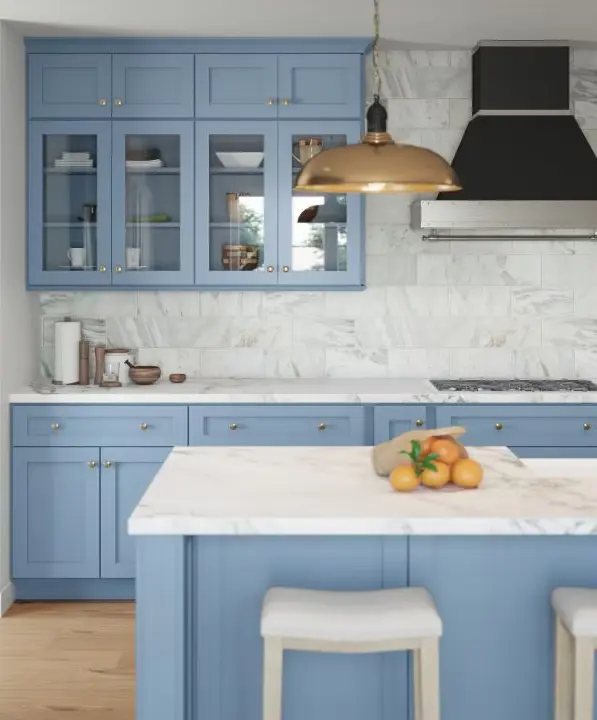
Framed cabinets have a face frame attached to the front of the cabinet box. Doors and drawers attach to or align with that frame, creating a familiar American cabinet construction used in many traditional, transitional and Shaker kitchens.
Frameless cabinets omit the face frame and use the cabinet sides as the structural front edge. This construction can provide a clean appearance and slightly wider interior access, and it is common in European-style and modern cabinet designs.
Neither construction is automatically best for every project. Available sizes, materials, hardware, installation conditions, budget and desired door style all matter. Quality depends on the complete cabinet specification rather than the framed or frameless label alone.
Overlay affects appearance. Full-overlay doors can make framed cabinets look streamlined, while inset construction exposes the frame intentionally. Frameless cabinetry usually uses full-overlay doors with narrow reveals between fronts.
Compare both options through our cabinet style pages and available brands. A design consultation can show how each construction changes storage, proportions and budget in the actual room.